Bishop Robert gives Presidential Address
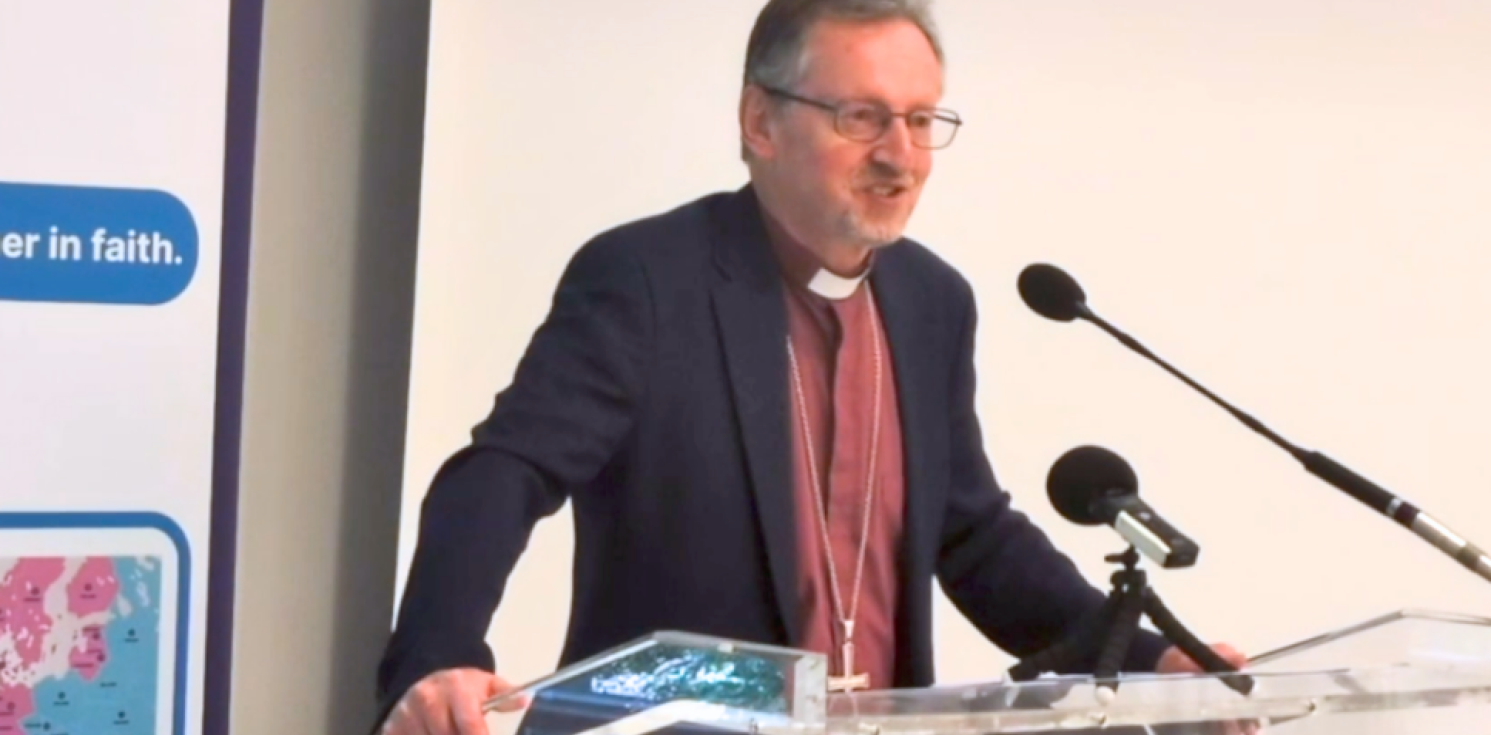
Bishop Robert gave his Presidential Address at Diocesan Synod on Monday 1st June. Below is a recording of that with a transcript below:
Presidential Address Diocesan Synod 2026 – The Bishop of Gibraltar in Europe
In this address, I want to do four things. Firstly, I will say something about the things that are happening in the world which set the global context for our life as a diocese. From that, I want to talk about the theme of this synod, how the synod is structured and how we hope it will flow. I will then say something about a couple of recent developments in our church. And then I will introduce three subject areas to which our synod will be attending.
Our context
Considering our context, I am struck by how much more difficult and dangerous the world has become since the turn of the millennium. To the east, we face a Russian nationalism expressed in ‘Russkiy Mir’, a Russian world claiming to encompass all those tied to Russian culture, notably Ukrainians, promoting values upheld by the Russian Orthodox Church and standing against what it holds to be liberal decadence. To the West we have an equal and opposite nationalism expressed in the slogan ‘Make America Great Again’ with a US foreign policy that is assertive and unpredictable. In between is Europe, trying to hold onto a multilateral rules-based world order, and the values of freedom, democracy and the rule of law, but where in many countries right-wing nationalism is in the ascendancy. It is a situation of rising threat and in some cases actual conflict and war.
Meanwhile, in Sub-Saharan Africa, millions suffer the loss of their homes and livelihoods through human conflict and changes in climate. Sudan embodies the biggest humanitarian crisis the world currently faces. Since the outbreak of conflict between the national Sudanese Armed Forces and the paramilitary Rapid Support Forces in 2023, violence between armed factions has led to widespread displacement, food insecurity and the collapse of basic services. According to the European Commission, more than 30 million people need humanitarian assistance and 15 million people have been displaced over national and international borders. The intensity and scale of the crisis has placed extraordinary pressure on Sudan and on neighbouring countries such as Chad, South Sudan, Eritrea and Ethiopia – several of whom are themselves in a highly fragile state. At the same time the US, EU and UK have all cut their international aid budgets leading to a situation that has been described as ‘the great aid recession’.
The Theme and flow of our synod
It is with this global context in mind, that as bishops and archdeacons we proposed for this synod, and our archdeaconry synods this year, the theme ‘Called to be peacemakers: 2 Corinthians 5:19’ - ‘in Christ God was reconciling the world to himself, entrusting the message of reconciliation to us’. We shall be reflecting on conflict transformation, peacebuilding, peace-making – the skills and qualities needed to be those ambassadors of reconciliation that St. Paul commends.
The Bible Studies for this synod are based on chapters from the letter to the Ephesians. This letter represents a kind of summit of New Testament teaching, in which God is shown to be at work in creation bringing all things together in Christ. In this letter, the church has a key role in God’s reconciling project, since it holds diversity within unity in itself and so models what God intends for the whole world.
Reconciliation and peacebuilding are theologically rooted and of global relevance but they are also deeply and locally practical. We know the importance and the difficulty of resolving conflict in our own families. Within the chaplaincies of this diocese, conflict can sometimes become extremely intense, destructive and consuming of senior staff time. One of our archdeacons has been involved in bringing to a conclusion, at least for now, a conflict that has been running for 10 years.
Within the diocese Jean-Bosco Turahirwa is our Bishop’s Advisor for Peace and Conflct Transformation. He has trained no less than 96 peacemakers most of whom are active in the diocese. Jean-Bosco is unable to be here owing to work commitments but I am delighted that this week we have with us The Reverend Professor Jolyon Mitchell, Principal of St. John’s College, Durham, who will be leading our thinking in this area. Jolyon specialises in Religion, Violence and Peacebuilding, especially with reference to the arts and media. He is the author of several books in this field, and I am enormously looking forward to hearing and learning from him.
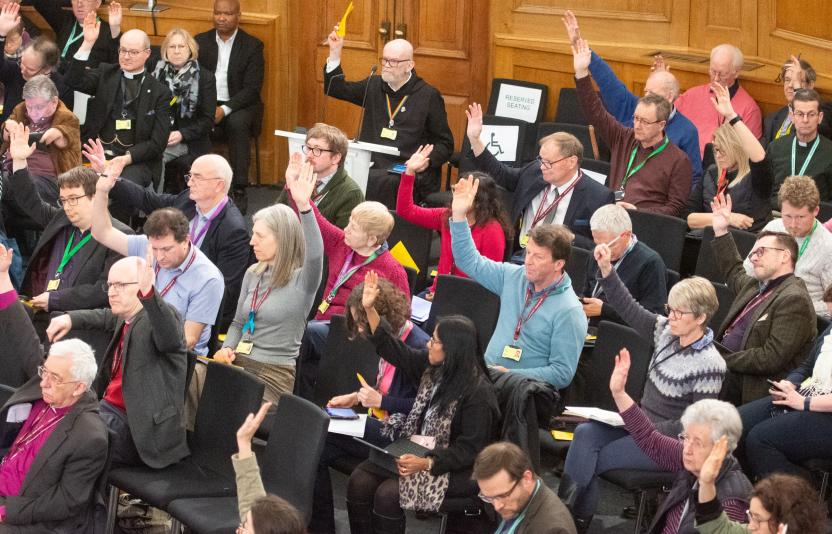
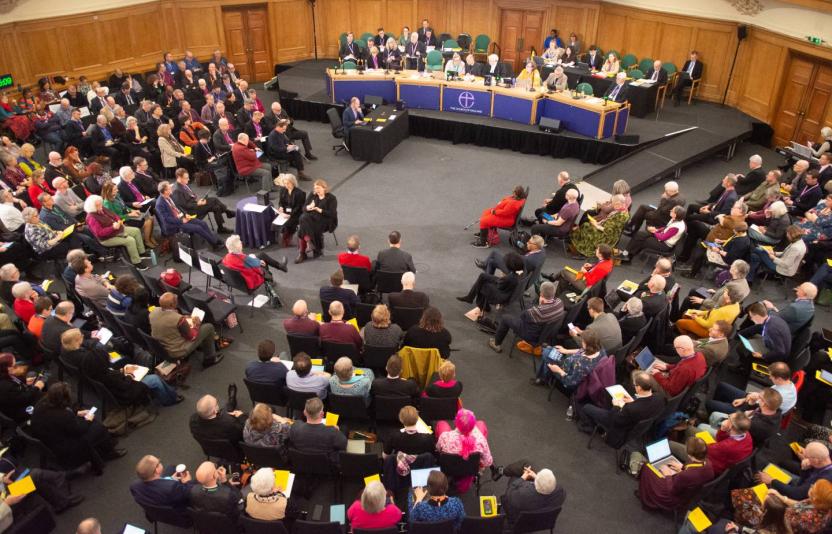
I want to say something about the shape of the synod. The theologian Paul Avis has suggested that the work of a synod is, in order of importance, listening, learning, consulting, discerning, deliberating, praying and only then perhaps deciding. Each day of the synod therefore begins with listening to God in chapel – and we shall be hearing readings from Ephesians to be used in the Bible Studies. We move after breakfast to learning through our Bible Studies and our sessions with Jolyon. After lunch, we move into sessions that are more concerned with consulting. Then on Wednesday afternoon and Thursday morning we have sessions concerned with deliberating and deciding. The whole synod is wrapped in prayer – morning, noon and night.
The first and fundamental action on Paul Avis’s list is ‘listening’. Listening actively is hard work. We will be listening to speakers in the main sessions, and listening to each other in group work and in the coffee and meal breaks. Listening is particularly hard work if you don’t hear well – and in this synod there will be lots of us whose hearing is not as good as it was. Listening to those with unfamiliar accents, or listening to conversations in English if English is not your first languagealso requires more effort. So we need to practice the virtue of patience in our listening with one another.
Recent Developments in our Church
I turn now to a couple of significant developments in our church in recent months. Most significantly, we now have a new Archbishop of Canterbury. There was much public concern about how long it was taking to elect a new Archbishop. How was it that the Roman Catholic Church could elect a new pope in a few days, whereas it takes our church a year? We can’t and don’t just lock the bishops in a room at Lambeth Palace and ask them to choose their new leader. For us, it’snot like ‘Conclave’! The election of a new Archbishop of Canterbury involves representatives of laity and clergy from many different constituencies, this time from around the world. The appointing committee was chaired by a layman, and out of its twenty members only two were Church of England bishops.
As it is, I can tell you that I for one, along with most bishops that I know, are thrilled with the appointment of Archbishop Sarah. I say that with some surprise at myself, because she is so different from what we have had in the past and what we might expect. But she is, I believe, exactly what the Church of England needs at this point in its history.
Archbishop Sarah is specifically emphasising the pastoral role of her ministry. She has moved, as has often been said, from being chief nurse to chief shepherd. Amongst all the things that the church might have been looking for – a gifted evangelist, a profound theologian, or whatever, what we need now is a skilled chief pastor. One of our underlying weaknesses as a church is some considerable administrative and governance-level confusion. Good administration is a key element of effective pastoral care. And having led nursing in Europe’s largest health organisation she is able to provide this.
Previous archbishops have begun by setting out mission priorities. Archbishop Sarah has not done this. In fact, for a church which has become overloaded with new initiatives and projects, Sarah has said she is not going to be announcing and commissioning new projects. To diocesan bishops and central systems that have continually been running faster than they should, that comes as a huge relief. Instead, Archbishop Sarah is focusing on being a certain kind of person and embodying and encouraging certain kinds of values. She has pledged to lead the Church with a core focus on compassion, consistency and calmness. Compassion, consistency and calmness. That seems to me exactly right.
An emphasis on compassion flows from her experience as chief nursing officer and a cancer nurse. She is an advocate for the marginalised, prioritising generous response to refugee crises and emphasizing dignity for the vulnerable and palliative care for the dying.
In a fractured and polarizing world she has committed to ‘calm, non-anxious leadership’. She focuses on being a stable, steadying presence rather than headline-grabbing initiatives.
She consistently names the protection of the vulnerable as a foundational responsibility. She has committed to consistent safeguarding practice, listening to victims and survivors of church abuse with the aim that they experience the church as a kind and safe place.
In April, I accompanied Archbishop Sarah on a visit to Rome, where she met with Pope Leo. I was not involved in the actual Papal meeting, but I can say that the whole experience was very warm, hopeful and indeed joyful. It is evident to me that the meeting with the Pope had a big impact on the Archbishop. Following on from King Charles’s visit to Rome a few months previously, there is an intense desire for good relationships with the Roman Catholic Church in the interests of Christian Unity, and that is very good news for our diocese, because we are often at the leading edge of those relationships.
Living in Love and Faith has for several years been by far the biggest item on the agendas of the General Synod, the House of Bishops and the Faith and Order Commission. After a five hour debate, a vote at the February meeting of the General Synod brought the LLF process to a close with clear majorities in all three houses.
There will be varying views including amongst us here as to whether the Synod’s conclusions represent too much or too little change. I remain deeply grateful for all who have engaged with the LLF programmes over recent years and thank them for the insights and wisdom they have brought to the deliberations. A whole range of hopes, anxieties and fears have been generated during this process. I appreciate that for some, engagement with LLF has come at great personal cost.
The questions and conversations continue, and the Archbishops are setting up a working group that will look particularly at two areas on which synod asked for further work, namely a formal process of liturgical approval concerned with the prayers of love and faith, and clergy and same-sex marriage. Within this diocese, I am in conversation with Louis Darrant and the LGBTQ+ network he animates and am keen to see how we best support and pastor our LGBTQ+ people. Meanwhile, the House of Bishops has set up a Pastoral Consultative Group chaired by The Bishop of Winchester to consider particular cases in our pastoral practice.
Three subject areas for our Synod
Turning now to three subject areas for our synod: firstly strategy, secondly, safeguarding and thirdly governance.
You have in your pack an extensive set of paperwork on pages 47 and following relating to the development of a diocesan strategy. Bishop Andrew will be saying much more about this. But let me provide some context.
We come into the process of strategy formulation in a position of relative strength, thanks be to God. The reports from the Diocesan Board of Finance show numbers that look better than they have done for a long time, and Common Fund collection rates are high. Thank you – I am enormously grateful to those who work hard to raise Common Fund contributions and to persuade others of its value. Last year, I reported that the statistics showed that our church attendance figures showed a growth that was one of the highest in the Church of England. That welcome pattern continued in 2025. In the last year, average weekly adult attendance grew by 6.4% and average child attendance by 6.5%. Those were some of the highest growth rates across the Church of England. Consistent with that, over the past three years, our growth rates are as high or higher than all other dioceses. Alongside that, our bishops are confirming fantastic candidates of all ages many with remarkable testimonies of faith. Now it’s possible that in your chaplaincy you are seeing falling numbers. And we know that the effects of Covid and Brexit remain and are hitting some parts of our diocese particularly hard. But do be encouraged that overall we have a growing and relatively youthful and diverse diocese.
We can draw particular encouragement from our vocations process. Again, the statistics show that, relative to the overall size of our worshipping community, we have been producing more ordinands than any other diocese. Thank you to our DDO, William Gulliford, our vocations officers, ADDOs and chaplains for your part in encouraging ordained vocations. At a time when the Church of England faces something of a cliff edge of declining clergy numbers, this is hugely important and something we can be really proud of. Because we not only produce significant numbers of ordinands; we produce very high quality ordinands.
Now, there are numerous very interesting work streams running with our strategy: children and youth; healthy and thriving chaplaincies; intercultural and contextual ministry; ministry training and support for lay and ordained, new worshipping communities as well as several areas of public witness. There is central church money available to invest in our mission. But we can’t invest in everything.
In particular: our wonderful curates are also costly. How much of our valuable central church funding, if any, should be spent on curacies and how much on other diocesan projects? So this synod provides an opportunity to start to set our strategic objectives more clearly and to start to distil some priorities.
I would mention one particular achievement. 15 years ago a group led by Mark Collinson, then chaplain of Amsterdam, began a project to produce Dutch language liturgy. Eventually, and with the leadership of Dorienke de Vries, the project came to fruition, and I was at the recent House of Bishops Standing Committee where a few months ago final approval was given to these liturgical texts. It has been a challenging project, involving academics and liturgical practitioners producing texts that could be used across Dutch Dutch and Belgian Dutch and reflecting Anglican theology in the context of Dutch Protestantism and Catholicism. It took 15 years. Sometimes we have to think and plan for the long term – not just for the next year, or even three years or five years.
One further strategic priority which is not emphasised in the papers but which is nonetheless important is the appointment of a second suffragan bishop. This is something that our 2023 Bishop’s Council voted for and previous synods have affirmed. It would make a big difference to our central capacity for mission and ecumenical engagement. My conversations with Church Commissioners encourage us to go for this. But it will be important that amidst all the other possibilities it doesn’t slip off our agenda.
Safeguarding
Secondly, safeguarding. I have been reflecting that over the past five years, whilst our safeguarding capacity has increased, the challenges, demands and scope of safeguarding continue to increase too. The National Safeguarding Team have issued a framework that covers five areas: culture, leadership and capacity; prevention; recognising, assessing and managing risk; victims and survivors; learning, supervision and support. Next October INEQE will audit our diocese for our performance in these five areas.
This will be a diocesan audit, not just an audit of our safeguarding team, and I have to say it is a huge challenge. The auditors will be looking for hard evidence: for example: numbers of chaplaincies using dashboards; percentage of churchwardens who have safeguarding checks; evidence of safeguarding briefings and debriefings following chaplaincy visits by archdeacons.
Over and beyond this, the Charity Commission for England and Wales are holding the Church to account in a much firmer way than they have previously. One result of this, is that the Church is now going to have to adopt a much broader approach to keeping people safe from harm. It will not be sufficient to have processes in place for children and vulnerable adults. We will have to have proper processes for dealing with such things as bullying and harassment whether the victim is a vulnerable adult or not. This will potentially require a very significant investment in HR staff both nationally and at diocesan level.
Governance
This leads to our third topic of interest, namely governance. Here again, the Charity Commissioners have been asking the church pointed questions. Church governance has always looked and felt rather different from governance in other charitable organisations. You have a paper in your pack that explains and compares synodical governance with the kind of governance responsibilities expected of trustees. One thing is clear: the Charity Commission requires charity trustees to be properly informed about and engaged with their charity and to have the skills needed to exercise these responsibilities properly. This includes, most particularly, the responsibility to keep people safe from harm. So trustees will increasingly need to be able to demonstrate that they are engaged with safeguarding. If you are a trustee, you will already have experienced some increase in expectations here, and Stephen Green, our DBF chair, will be presenting to us some importance governance options for the future.
As I conclude: this is our new Diocesan Secretary Mervyn McCallagh’s first synod. So I particularly welcome Mervyn and hope that the experience is not too much of a baptism of fire. Stephen Green dropped into our last synod after being newly appointed, so this is his first full residential synod too. By contrast, this is Archdeacon Peter Hooper’s last synod before he leaves us for a new role in Leicester Diocese. There will be formal opportunity to say farewell to Peter later in this synod.
We meet at a challenging, polarising and conflictual time in our world. This synod offers opportunities to learn or learn again the habits and skills needed to be people of peace and reconciliation. At the same time, we will be carrying forward our diocesan agenda especially in these three key areas of strategy, safeguarding and governance. I hope this will be a happy, fruitful and blessed synod.
Finally, I want to express my own personal sense of continuing excitement about our diocese and our future. My last word is to say a huge thank you to you the lay people and clergy of the Diocese in Europe. It is you, your efforts, your love for each other, your concern to welcome and to care, your hard work and willingness to shoulder responsibility which make this diocese the amazing place that it is.